New York Architecture Cruises

New York Architecture Cruises

Discover New York City's famous architecture, historic bridges, waterfront landmarks, and iconic skyline from one of the best viewpoints in the city—New York Harbor.

Famous NYC Buildings Skyline Photography Harbor & Bridge Views
Architecture from the water

See New York City's Buildings From a Better Angle

People search for New York architecture cruises and New York City architecture cruises because they want more than a quick look at tall buildings. They want to understand the skyline. They want to see how Lower Manhattan rises from the harbor, how historic bridges frame the East River, how modern glass towers stand beside older stone buildings, and how New York became one of the most recognizable architectural cities in the world.

NYC Skyline Cruises is not a formal classroom-style architecture lecture cruise. Our public cruises focus on the complete New York Harbor experience, including the Manhattan skyline, Brooklyn Bridge, Manhattan Bridge, Lower Manhattan, the Statue of Liberty, Ellis Island, and unforgettable waterfront views. However, because our route naturally passes many of the city's most significant architectural landmarks, it is an excellent choice for visitors who want to experience New York's architecture from the water.

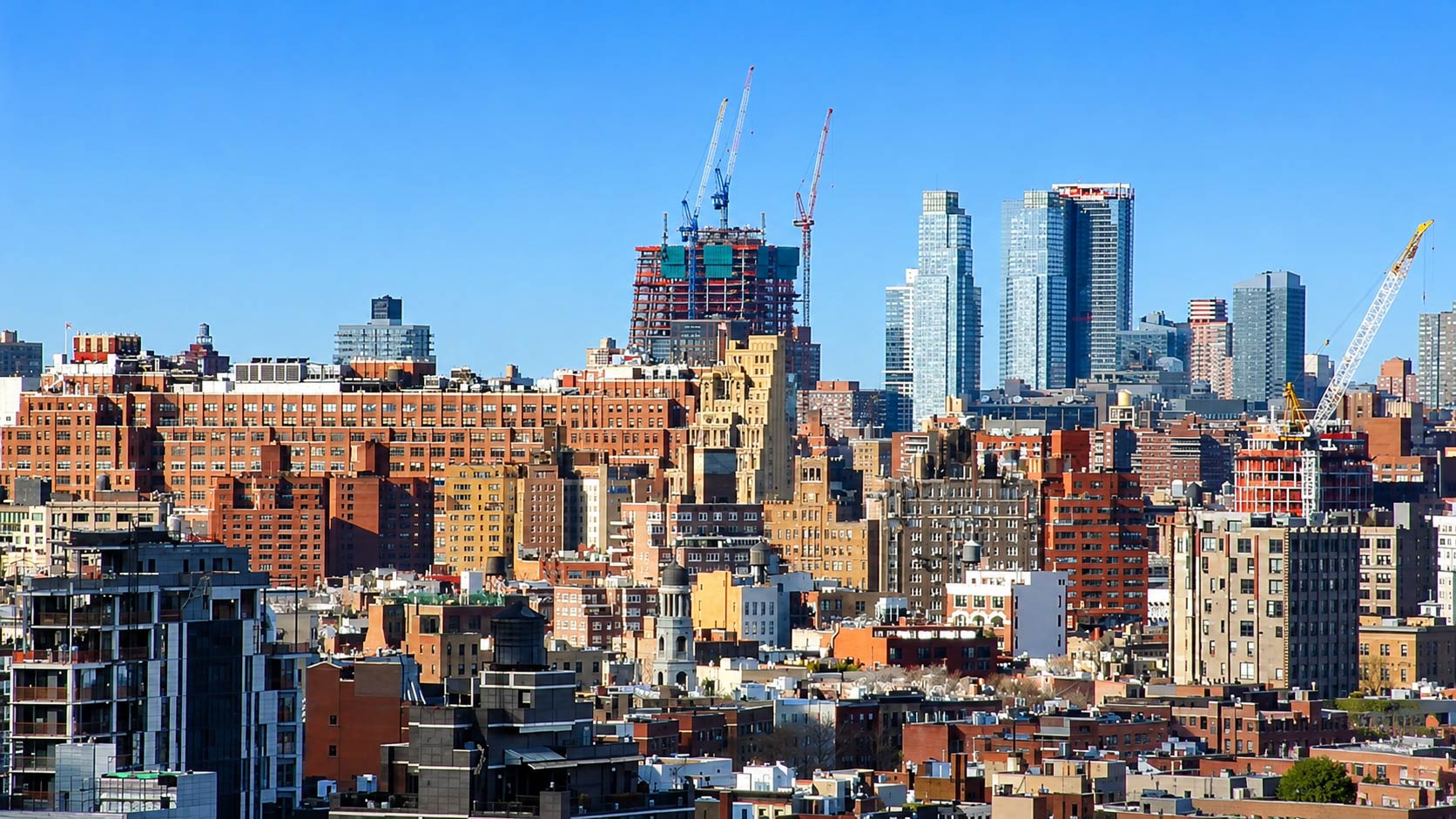
Exploring New York's architecture on foot is exciting, but it can also be overwhelming. Many of the city's most famous buildings tower hundreds of feet overhead, forcing you to look almost straight up just to appreciate their design. If you want to compare another architectural style, you'll often need to walk several blocks—or even miles—to the next landmark. Experiencing the city's architectural history this way can take an entire day.

A New York architecture cruise offers an entirely different perspective. From the water, you can admire dozens of iconic buildings in a single panoramic view while comfortably cruising through New York Harbor. Instead of seeing one skyscraper at a time, you'll experience entire sections of the skyline at once, making it easy to compare Art Deco masterpieces, historic stone buildings, modern glass towers, suspension bridges, and waterfront landmarks. In just one cruise, you can appreciate how these landmarks work together to create one of the most famous skylines anywhere in the world—something that's nearly impossible to experience from street level alone.
The best viewpoint

Why New York Architecture Looks Different From the Water

New York was shaped by its waterfront. Long before the skyline became a global symbol, the harbor was the front door of the city. Trade, immigration, finance, transportation, and development all pushed the city upward and outward from the water.

You See the Skyline as One Complete Composition

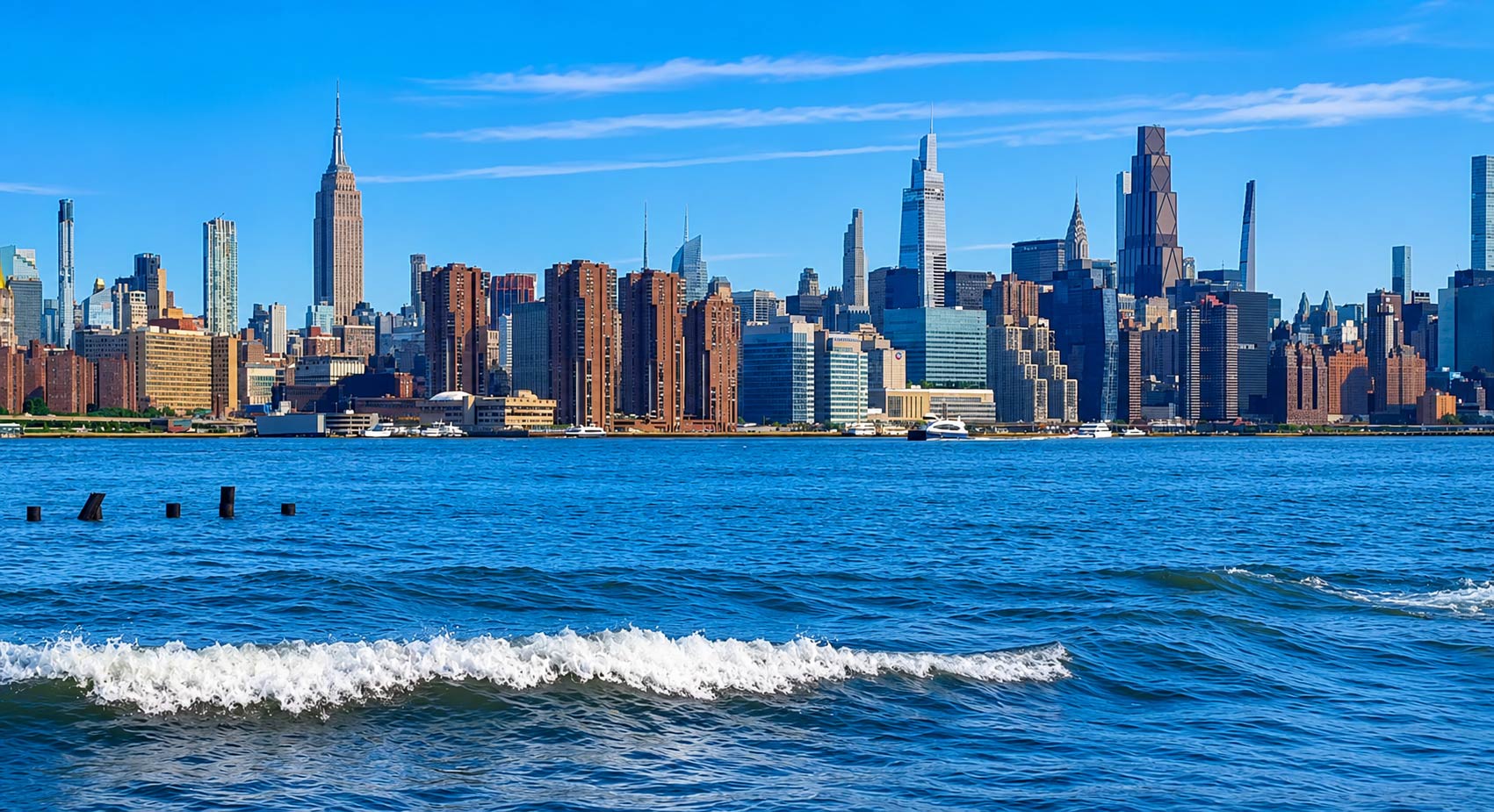
On the sidewalk, even famous towers can be hard to appreciate because you are standing too close. From New York Harbor, the distance gives you perspective. Lower Manhattan becomes a layered skyline of glass, steel, stone, spires, setbacks, and reflections. This is the view that helps guests understand why the Manhattan skyline is more than a collection of tall buildings. It is a composition built over generations.

The Harbor Explains the City's Growth

Architecture is not only about individual buildings. It is also about location. From the water, you can see why Lower Manhattan became a commercial powerhouse, why bridges changed the shape of the city, and why waterfront neighborhoods continue to attract new development. A NYC skyline cruise gives visitors the kind of wide-angle view that is almost impossible to get from land.

  • Better views of Lower Manhattan and One World Trade Center
  • Wide-angle perspective of skyline layers and building heights
  • Close views of the Brooklyn Bridge and Manhattan Bridge
  • Excellent setting for skyline and architecture photography

New York architecture was built to impress from the street, but the skyline was meant to be seen from the water.

The harbor view shows the shape, scale, and drama of the city in a way no sidewalk can match.

Skyline history

The Evolution of New York City Architecture

New York architecture tells the story of the city itself. Lower Manhattan began as a compact trading settlement and grew into a dense business district filled with banks, exchanges, government buildings, warehouses, churches, and early skyscrapers. As technology changed, the city changed with it. Elevators, steel frames, subway lines, bridges, zoning laws, and new construction methods allowed New York to build higher than almost anywhere else.

The skyline includes many different architectural eras. Some buildings reflect Gothic and Beaux-Arts influences. Others show the confidence of the Art Deco period, when towers became symbols of ambition and progress. Later glass-and-steel buildings introduced a cleaner modern look. Today, contemporary skyscrapers use reflective façades, slender profiles, luxury residential designs, and new engineering techniques to reshape the skyline again.

That mix is what makes New York City architecture so powerful. It is not one style. It is many styles layered together. When you view the skyline from the water, those layers become easier to see.

Today, architects and urban planners continue to study New York because few cities display such a wide range of architectural styles within a relatively small area. Gothic Revival, Beaux-Arts, Art Deco, International Style, Postmodern, and contemporary glass skyscrapers can all be seen during a single cruise through New York Harbor. That diversity is one of the reasons architecture enthusiasts from around the world continue to visit New York City.

Manhattan skyline architecture seen from New York Harbor
Skyline Layers

Old and New Together

Lower Manhattan combines historic towers, modern glass buildings, waterfront landmarks, and harbor views.

New York architecture cruise view of bridges and skyline
Bridge Views

Architecture in Motion

Bridges, towers, and harbor landmarks become part of one moving New York City experience.

Landmarks from the harbor

Famous New York Buildings and Bridges to Look For

A New York City architecture cruise experience is about more than one building. The real beauty is how landmarks work together to create a skyline that feels instantly familiar from almost anywhere in the world.

One World Trade Center and Lower Manhattan

One World Trade Center dominates the Lower Manhattan skyline with its height, reflective glass, and symbolic presence. From the harbor, it rises above the Financial District and gives the skyline a clear center point. Around it, the surrounding towers create a dense wall of architecture that shows how Lower Manhattan continues to evolve while still holding onto its historic street grid and waterfront identity.

Historic Financial District Architecture

The Financial District is one of the most architecturally interesting parts of New York because old and new buildings sit so close together. Stone façades, narrow streets, early skyscrapers, modern office towers, and civic buildings all compete for space. From the water, you can see the district as a skyline rather than a maze of streets.

The Woolworth Building

Completed in 1913, the Woolworth Building was once the tallest building in the world and remains one of New York City's architectural treasures. Designed in the Neo-Gothic style, its decorative façade, pointed arches, and intricate detailing earned it the nickname "The Cathedral of Commerce." While newer skyscrapers now surround it, the Woolworth Building continues to stand out as one of the most recognizable examples of early American skyscraper design. Seeing it from New York Harbor allows visitors to appreciate how it fits naturally into the evolving Lower Manhattan skyline.

Brooklyn Bridge

The Brooklyn Bridge is one of New York's great architectural and engineering landmarks. Its stone towers, Gothic arches, and web of cables make it feel both historic and monumental. Passing near or beneath the bridge gives guests a better sense of its scale than simply walking across it. It is one of the strongest visual moments on many harbor and East River routes.

Manhattan Bridge

The Manhattan Bridge has a different personality. It feels more industrial, more direct, and more muscular than the Brooklyn Bridge. Its steel structure, suspension system, and repeating lines create a dramatic frame for skyline photos. Seeing both bridges close together helps guests understand how infrastructure became part of New York's architectural identity.

Empire State Building and Chrysler Building Views

Depending on visibility and route angle, guests may catch distant views of Midtown landmarks such as the Empire State Building and Chrysler Building. These Art Deco icons are among the most recognizable buildings in the world. Even when viewed from a distance, they help connect the Lower Manhattan harbor experience to the larger story of New York skyscraper design.

40 Wall Street

Often overshadowed by its taller neighbors, 40 Wall Street played an important role during New York's famous race to build the world's tallest skyscraper. Completed in 1930, this Art Deco tower remains one of the defining buildings of Lower Manhattan. From the harbor, its green copper roof and elegant proportions stand out among the surrounding office towers, reminding visitors that New York's skyline has been evolving for more than a century.

Statue of Liberty and Ellis Island

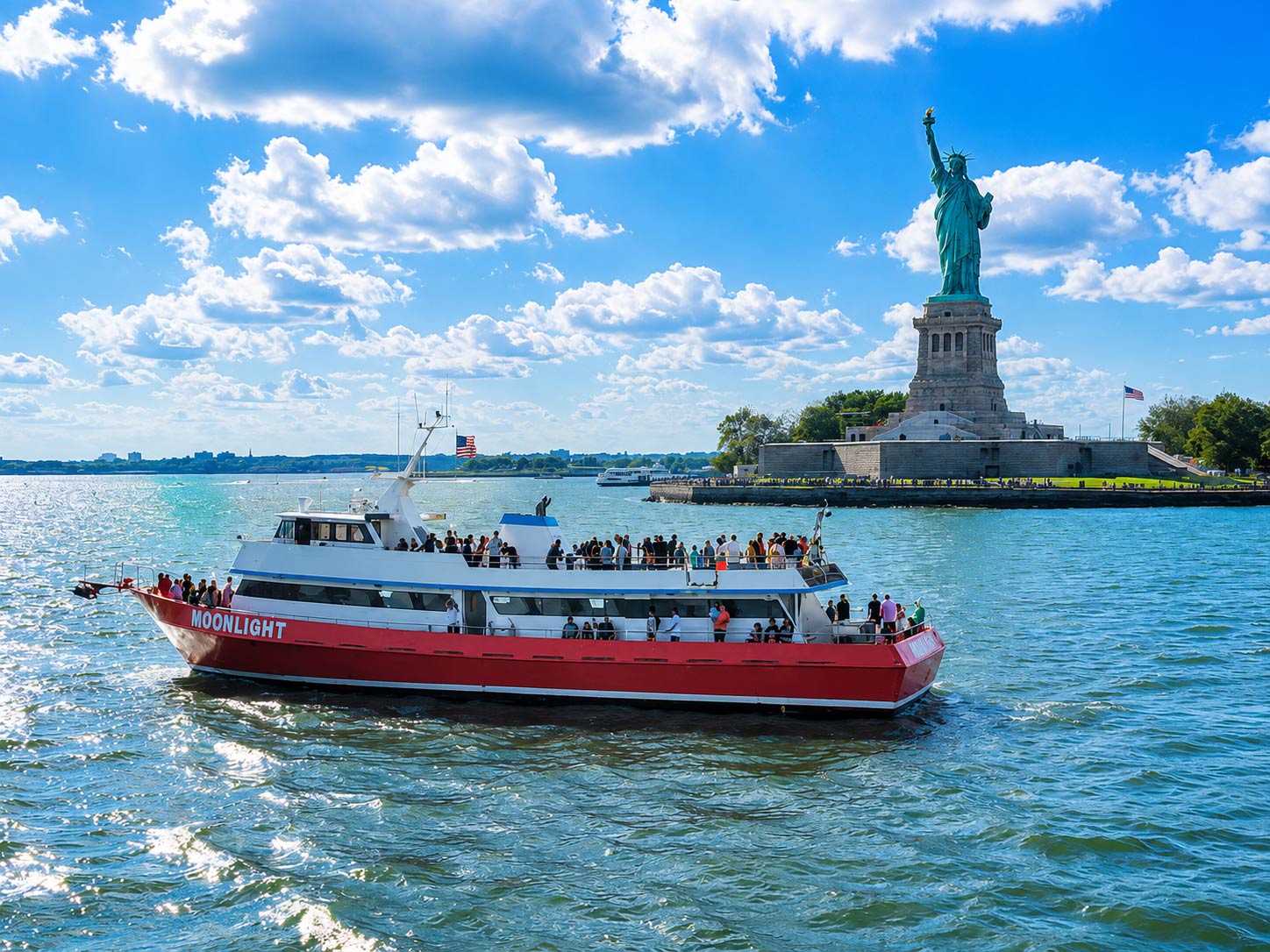
Architecture also includes monuments and civic landmarks. The Statue of Liberty and Ellis Island are not skyscrapers, but they are central to the architectural and cultural identity of New York Harbor. Their placement, symbolism, and relationship to the skyline make them essential parts of the city view. Our Statue of Liberty harbor cruise guide goes deeper into this part of the experience.

Architecture photography

Why Photographers Love New York Architecture From the Water

New York architecture is a dream subject because the city changes constantly with light, weather, reflections, and movement. From the water, photographers get cleaner compositions than they usually can from the street. There are fewer blocked views, less sidewalk clutter, and more room to capture buildings in relation to the skyline around them.

Golden hour can make glass towers glow. Sunset can create dramatic shadows across Lower Manhattan. Blue hour can turn windows, bridges, and waterfront lights into a layered cityscape. At night, the skyline becomes a different subject entirely as office windows, bridge cables, aircraft lights, and reflections on the harbor create depth and contrast.

One advantage of photographing New York architecture from the water is that the skyline is constantly changing. Every few minutes, the viewing angle shifts, revealing buildings that were previously hidden behind others. This moving perspective allows photographers to capture the relationship between towers, bridges, waterfront parks, ferries, and the harbor itself. Instead of taking isolated photographs of individual buildings, visitors can create images that tell the story of New York City's architectural evolution.

If photography is a major part of your visit, take a look at our Manhattan Skyline Guide and NYC Cruises at Night pages. Those guides help connect architecture, skyline views, and timing so you can choose the cruise experience that fits the photos you want to capture.

Architecture Photo Tips

Use the skyline as the subject, but look for shape and contrast. Buildings are not just tall objects; they create patterns, reflections, shadows, and layers.

  • Use bridges as natural frames
  • Capture Lower Manhattan as a full skyline
  • Photograph glass reflections near sunset
  • Try wider shots instead of only close-ups
  • Keep your phone or camera ready near the bridges
Cruise experience

What to Expect on an Architecture-Focused Skyline Cruise

If your main interest is New York architecture, the best way to enjoy the cruise is to think of the route as a moving skyline gallery. The city changes as the vessel moves, and every angle tells a slightly different story.

The Route Creates the Story

As the vessel travels along the harbor and bridge areas, guests see the relationship between Lower Manhattan, the East River, New York Harbor, Brooklyn, and the Statue of Liberty. The skyline does not appear all at once. It unfolds. Bridges become frames, towers shift position, and waterfront landmarks move in and out of view.

A Relaxed Way to Study the City

Unlike a walking architecture tour, a skyline cruise gives guests space to relax while still seeing major landmarks. Public NYC Skyline Cruises also include complimentary beer, wine, soda, and bottled water onboard. That makes the experience easy for couples, families, visitors, locals, and groups who want architecture, sightseeing, and harbor views in one outing.

Viewpoint Architecture Experience Best For
Walking Tour Close-up details, façades, entrances, plaques, and street-level history. Guests who want deep building-by-building information.
Observation Deck (Top of a Building) High view from one fixed location, often excellent for scale and distance. Guests who want aerial city views and skyline photos from above.
Skyline Cruise Wide harbor perspective of towers, bridges, neighborhoods, and landmarks together. Guests who want architecture, sightseeing, photography, and Statue of Liberty views.
Private New York architecture cruise style skyline charter
Private Events

Custom Architecture-Style Cruises

Private groups can request a skyline-focused route with more emphasis on buildings, bridges, and photography.

Private architecture-style cruise

Private New York City Architecture Cruise Options

For groups that want a more customized experience, a private charter can be shaped around architecture, skyline viewing, photography, corporate hospitality, client entertainment, school groups, family celebrations, or special events. A private cruise gives your group more flexibility than a public sightseeing cruise because the timing, atmosphere, and event style can be planned around your goals.

A private architecture-style cruise can focus more heavily on Lower Manhattan, bridges, harbor landmarks, skyline photography, and the overall story of New York's waterfront development. It can also be combined with cocktails, beer, wine, hors d'oeuvres, or catering depending on the event. For companies, design teams, real estate groups, architects, construction professionals, and visiting guests, the harbor can become a memorable setting for seeing the city from a different angle.

To plan a custom event, visit our Private NYC Skyline Cruises page.

Buildings, bridges, and harbor views

Experience New York's Architecture From the Water

Reserve your seats aboard NYC Skyline Cruises and enjoy panoramic views of Lower Manhattan, historic bridges, New York Harbor, the Statue of Liberty, and one of the world's most recognizable skylines—all from the comfort of the water.

Questions before you book

New York Architecture Cruise FAQs

Quick answers for guests interested in New York architecture cruises, skyline views, famous buildings, bridges, and photography from the water.

Yes. Some New York cruises focus specifically on architecture, while skyline sightseeing cruises also give guests strong views of famous buildings, bridges, skyscrapers, and waterfront landmarks.

No. NYC Skyline Cruises is a sightseeing cruise, not a formal architecture lecture cruise. However, the route offers excellent views of New York architecture, including Lower Manhattan, One World Trade Center, the Brooklyn Bridge, Manhattan Bridge, New York Harbor, and the Statue of Liberty.

Depending on visibility and route conditions, guests can see Lower Manhattan, One World Trade Center, Financial District towers, waterfront buildings, Brooklyn Bridge views, Manhattan Bridge views, and distant skyline views toward Midtown.

The water gives you space and perspective. Instead of standing too close to the buildings, you can see the skyline as a full composition and understand how towers, bridges, neighborhoods, and harbor landmarks connect.

Yes. Sunset can create warm light, reflections, shadows, and stronger contrast across the skyline. Early evening and night cruises are also popular for photographing illuminated buildings and bridges.

Yes. Private groups can request a custom skyline charter with more emphasis on buildings, bridges, waterfront views, photography, and the overall architecture of New York Harbor.

No. This is a sightseeing cruise that provides water-level views of the Statue of Liberty without stopping at Liberty Island.

Yes. Public NYC Skyline Cruises include complimentary beer, wine, soda, and bottled water onboard.

The Best Way to Appreciate New York's Architecture Isn't Looking Up—It's Looking Across.

Standing beneath a skyscraper only reveals a small part of its design. From New York Harbor, you can see how dozens of historic buildings, modern towers, suspension bridges, and waterfront landmarks come together to create one of the most recognizable skylines anywhere in the world.

Ready to see the skyline?

Book a New York Harbor Cruise With Architecture, Bridges, and Skyline Views

Reserve your seats on a NYC Skyline Cruise and experience New York City's architecture from the water, including Lower Manhattan, bridge views, New York Harbor, and the Statue of Liberty.

Reserve Your Seats
TOP