Look closer
Hidden Things Nobody Talks About on a Classic Harbor Cruise
A good harbor cruise is not only about pointing at famous landmarks, because some of the best parts of New York Harbor are the stories sitting behind the landmarks, the things people pass every day without realizing how much history is hiding in plain sight.
Brooklyn Bridge Worker Deaths
The Brooklyn Bridge is one of New York City's most recognizable landmarks, but its construction came at a serious human cost. At least 27 workers lost their lives during the bridge's construction between 1870 and 1883, and many others were injured while building the towers, working with cables, and helping create one of the most important engineering achievements of the nineteenth century.
The Roebling family story also adds tragedy to the bridge. Chief engineer John A. Roebling suffered a crushing foot injury while surveying the bridge site and died from complications. His son Washington Roebling took over, but he developed severe decompression sickness while working in the underwater foundations. Even while ill, Washington continued directing construction, which makes the bridge not just an icon, but a monument to persistence.
Titanic Arrival Story
After the RMS Titanic sank on April 15, 1912, the surviving passengers were rescued by the RMS Carpathia and brought to New York Harbor. When survivors approached Manhattan, they saw many of the same harbor landmarks visitors still see today, including the Statue of Liberty and the growing skyline of Lower Manhattan.
Thousands of anxious family members, reporters, and curious New Yorkers gathered along the waterfront waiting for the survivors. For many passengers, the harbor represented relief after unimaginable fear. That is one reason the harbor can feel emotional when you know the stories connected to it.
Statue of Liberty Lighthouse History
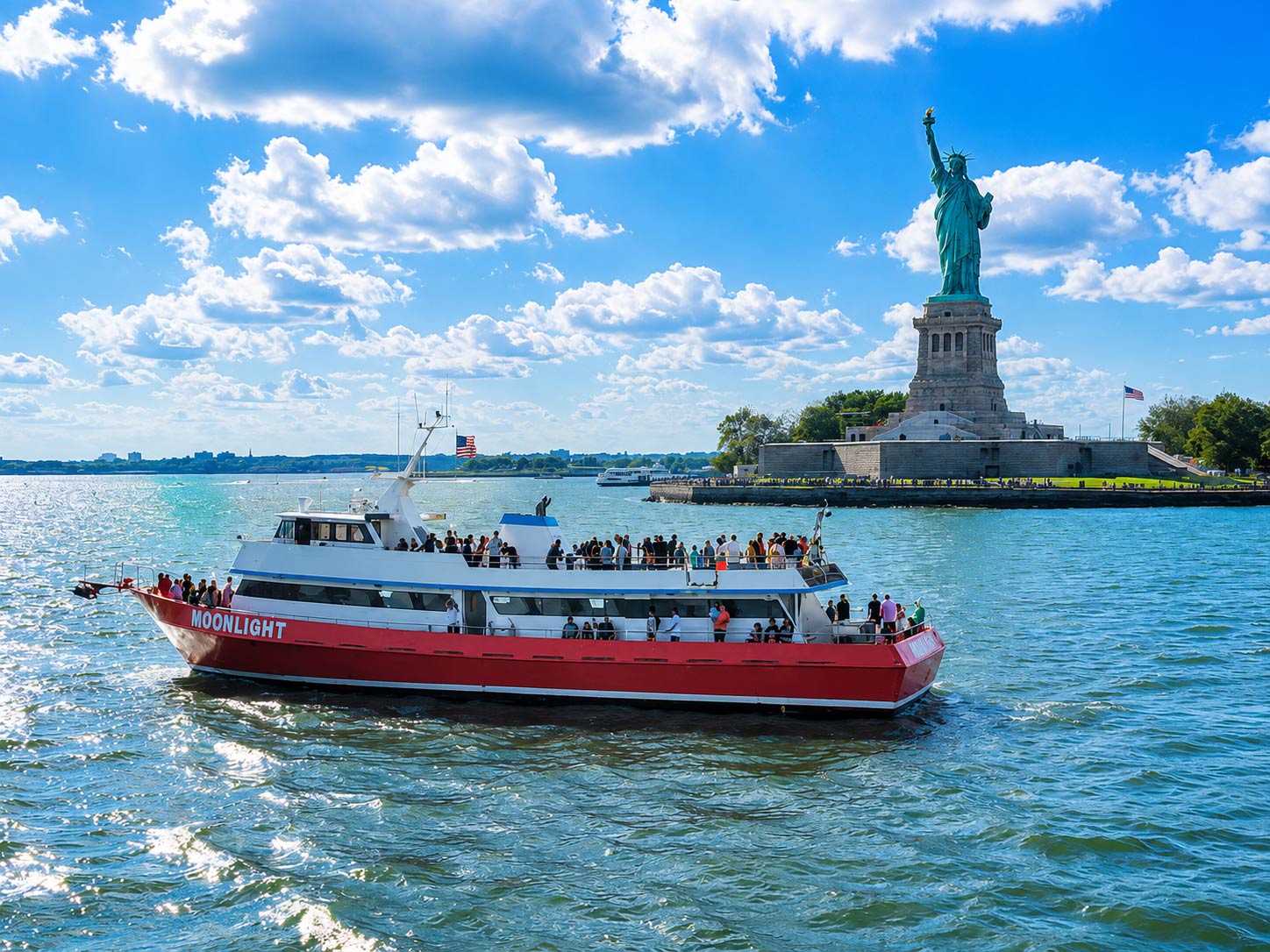
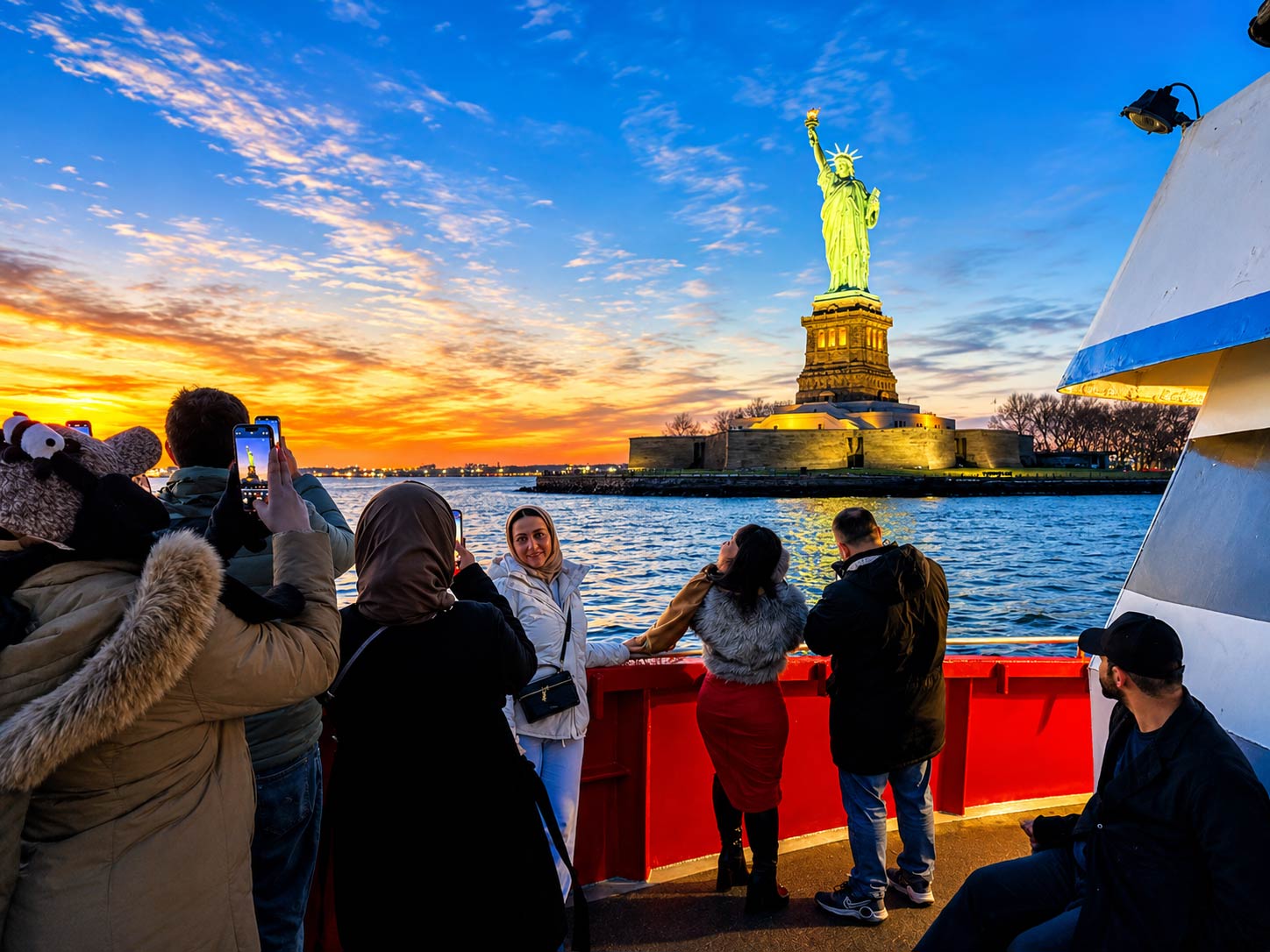
Many visitors are surprised to learn that the Statue of Liberty served as an active lighthouse from 1886 until 1902. The torch contained lights intended to help guide vessels entering New York Harbor, which means Lady Liberty was not only a symbol, but also part of the harbor's navigation story.
The lighthouse was not considered very successful because the light was not as effective as traditional lighthouse systems, but for more than 15 years the statue played a practical role in welcoming ships. That detail changes how you look at the torch when you pass by on the water.
Governors Island First Settlement
Governors Island is easy to overlook because the Statue of Liberty and the Manhattan skyline usually get most of the attention, but the island played an important role in the early development and defense of New York Harbor. Dutch settlers recognized its strategic location, and military forces later occupied the island for nearly two centuries.
When you pass Governors Island, you are seeing a piece of harbor geography that helped shape the city. Its position near the harbor entrance made it valuable for trade, military planning, and waterfront control long before modern New York became the city we know today.
Men in Black Headquarters
Fans of the Men in Black movies may recognize the small building near the Brooklyn-Battery Tunnel entrance. In the films, this structure served as the secret headquarters for the Men in Black organization, which is one of those fun movie details that makes the harbor more interesting once someone points it out.
In real life, the building is connected to tunnel ventilation, but Hollywood turned it into a secret underground command center. That is what I enjoy about New York. A practical piece of infrastructure can also become a movie landmark.
Ellis Island Family Ancestry Fact
Between 1892 and 1954, more than 12 million immigrants passed through Ellis Island. For many families, that island represented the beginning of a new life in America. Some visitors look at Ellis Island and realize that their family story may have passed through that exact place.
Historians often estimate that a large share of Americans can trace at least one ancestor through Ellis Island, which makes the island more than a building or a museum. It becomes personal. It becomes family history sitting in the harbor.
The East River Is Not Actually a River
Despite its name, the East River is not technically a river. It is a tidal strait connecting Upper New York Bay, the Harlem River, and Long Island Sound. That is why the current can behave differently than people expect, and why the water can flow in different directions depending on the tide.
This matters for harbor cruising because New York waters are alive with movement. Ferries, tugboats, sailboats, commercial vessels, tides, currents, and wind all interact, which is why experienced captains and harbor pilots respect these waters.
New York Harbor Oyster History
Before New York became a major city, New York Harbor contained one of the largest oyster populations in the world. Oysters were everywhere. They were street food, restaurant food, working-class food, and luxury food depending on where and how they were served. Oyster shells were so abundant they were used in roads, construction, and landfill.
Today, environmental organizations are working to restore oyster reefs because oysters help filter water, create habitat, and reconnect the harbor to its natural history. The idea that the same harbor known for skyscrapers and ferries was once one of the great oyster environments in the world is one of the best hidden New York facts.
South Street Seaport and the Working Waterfront
South Street Seaport helps explain why New York became such a powerful city. The harbor was not just scenery. It was business, shipping, labor, trade, food, immigration, and commerce. Ships brought goods from around the world, and the waterfront shaped the economy long before tourists came to photograph the skyline.
When you pass the Seaport area from the water, you are looking at one of the places where New York's maritime identity is still visible, even as modern towers and restaurants now surround the historic waterfront.
The 9/11 Boat Evacuation
One of the most powerful modern harbor stories is the boat evacuation after September 11, 2001. With much of Lower Manhattan cut off, hundreds of boats helped move people away from the island. Ferries, tugboats, private vessels, and commercial operators became part of an emergency maritime response that showed how important the harbor still is.
That story is another reminder that New York Harbor is not just a place for sightseeing. It is part of the city's survival system, transportation system, and identity.
There are also little details along the harbor that make the cruise better when you know to look for them. You may notice the constant movement of ferries, which are part of New York's daily transportation life, not just tourist scenery. You may see tugboats working, which reminds you that the harbor is still a working harbor. You may notice how the skyline changes shape as the boat moves, because Lower Manhattan does not look the same from the East River, the Upper Bay, and the return toward Pier 36. That changing angle is one of the reasons I prefer a moving harbor cruise over standing in one place for a photo.
The harbor also forces you to think about New York as a city of edges. The best views are often where land meets water, where old piers meet new parks, where working infrastructure sits beside luxury towers, and where historic islands still hold stories that are bigger than their size. That mix is what makes New York Harbor different from a simple skyline backdrop. It is layered, busy, old, modern, practical, emotional, and cinematic all at the same time.