The Ultimate NYC Skyline Cruise Route Guide
Discover every landmark you'll see during our NYC Skyline Cruise. Learn where to look, when to grab the perfect photograph, and which attractions deserve another visit after your cruise ends.
The Ultimate NYC Skyline Cruise Guide: Every Landmark, Photo Spot & Place Worth Visiting
A New York City skyline cruise is much more than a boat ride to the Statue of Liberty. It's an opportunity to experience the city from the waterways that helped shape it, offering perspectives that simply can't be found from the streets below. If you're still deciding whether this is the right tour, read our complete guide to the best NYC sightseeing cruise.
Whether you're taking the cruise for the first time or returning for another visit, this guide is designed to help you get the most from every minute on the water. Along the way, we'll point out the landmarks you'll pass, explain why they're important, share the best places to take photographs, and recommend destinations that are worth returning to after your cruise.
Our goal isn't just to tell you what you're looking at—it's to help you experience New York Harbor the way locals, photographers, and experienced captains see it.
Today, Pier 36 is best known as the departure point for sightseeing cruises, but more than a century ago this stretch of Manhattan's East River looked dramatically different. During the late 1800s and early 1900s, the waterfront along the Lower East Side was one of the busiest working harbors in the United States. Cargo ships from around the world lined the piers while thousands of longshoremen loaded and unloaded everything from manufactured goods and food to raw materials that helped fuel New York City's rapid growth.
Unlike today's recreational waterfront, the East River was an industrial powerhouse. Warehouses stretched for blocks, railroad connections moved freight throughout the city, and nearly every pier had a specialized purpose. Ships from Europe, the Caribbean, and ports across the eastern United States arrived daily, making this neighborhood one of the busiest maritime districts in America.
For many workers, employment depended on the arrival of these ships. Longshoremen often gathered along the waterfront hoping to be selected for a day's work unloading cargo by hand. It was physically demanding labor, but it helped transform New York into one of the world's great port cities.
Although famous transatlantic passenger liners such as Cunard and the White Star Line became closely associated with the Chelsea Piers on Manhattan's west side, the East River remained essential to New York City's commercial shipping network. Together, these waterfronts made New York Harbor the busiest and most important gateway in the nation during the early twentieth century.
Today, visitors departing from Pier 36 experience the waterfront in a completely different way. Instead of watching cargo ships arrive from around the world, you'll board a sightseeing cruise that follows one of the most scenic routes in New York Harbor. Our NYC Skyline Cruise follows this exact route, making it one of the best ways to experience New York Harbor from the water. From the moment the boat leaves the dock, the skyline gradually unfolds, revealing historic bridges, vibrant neighborhoods, world-famous skyscrapers, and eventually one of the most recognizable landmarks on Earth—the Statue of Liberty.
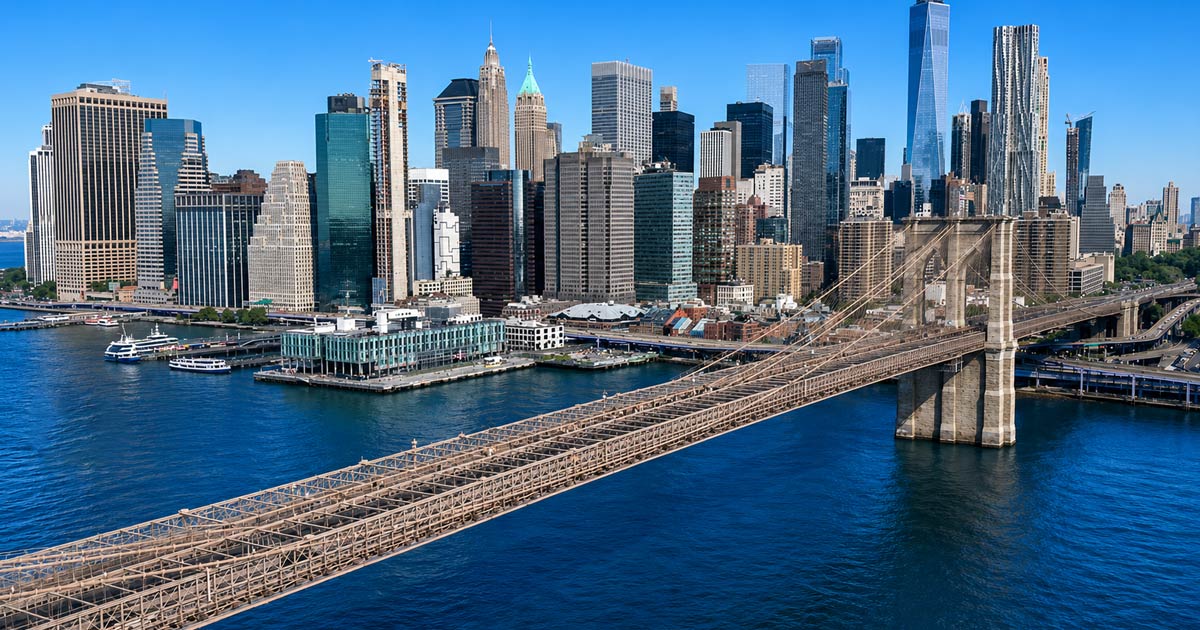
Cruise Route Highlights
- Depart Pier 36
- Manhattan Bridge
- Brooklyn Bridge
- South Street Seaport
- Lower Manhattan Skyline
- Governors Island
- Battery Park
- Ellis Island
- Statue of Liberty
- One World Trade Center
- Battery Park City
- Chelsea Piers
- Little Island
- Return to Pier 36
On This Page
Why an East River Departure Is Different
As you leave Pier 36, don't rush to look for the Statue of Liberty just yet. The beginning of the cruise is about watching New York gradually reveal itself.
Looking toward Manhattan, you'll notice a fascinating blend of architectural styles. Historic brick warehouses and industrial buildings stand alongside sleek residential towers, creating a visual timeline of New York City's evolution. Many of the older buildings once supported the shipping industry that helped establish New York as one of the world's greatest port cities, while the newer buildings reflect the continued revitalization of the Lower East Side.
Across the river, neighborhoods such as DUMBO and Brooklyn Heights begin to come into view. Once home to warehouses, factories, and maritime businesses, these neighborhoods have become some of Brooklyn's most desirable places to live while preserving much of their historic character. Many visitors are surprised by just how beautiful Brooklyn's waterfront is, especially when viewed from the river.
One of the biggest differences between departing from Pier 36 and departing from Manhattan's west side is how the scenery unfolds. Cruises leaving the Hudson River often reveal many of New York's famous landmarks almost immediately. From Pier 36, however, the experience builds naturally. First comes the Manhattan Bridge, followed by the Brooklyn Bridge, South Street Seaport, Lower Manhattan, Governors Island, Ellis Island, and finally the Statue of Liberty.
Rather than presenting everything at once, the East River allows each landmark to have its own moment.
As your boat continues south, you'll begin to understand why photographers love this route so much. Every few minutes the scenery changes, revealing another postcard-worthy view that simply can't be experienced from the streets below. By the time you reach New York Harbor, you've watched the skyline unfold exactly the way it was meant to be experienced—from the water.
The Manhattan Bridge
The first major landmark you'll encounter is the Manhattan Bridge, and it's the perfect introduction to the sightseeing portion of the cruise. As your boat approaches its massive steel towers, you'll quickly appreciate just how enormous the bridge really is. From street level, it's easy to overlook its scale, but from the water its engineering becomes impossible to ignore.
Completed in 1909, the Manhattan Bridge represented a major advancement in suspension bridge engineering and helped accommodate New York City's rapidly growing population by providing another vital connection between Manhattan and Brooklyn. Today, it remains one of the busiest transportation corridors in the city, carrying vehicles, pedestrians, cyclists, and multiple New York City subway lines every day.
As you approach the bridge, look upward.
One of the most memorable moments is watching subway trains rumble overhead while traffic moves across the bridge and your boat quietly passes beneath it. It's a perspective that very few people ever experience.
The Manhattan Bridge also frames one of the first unforgettable skyline views of the cruise. Looking south through its steel structure, you'll begin to see Lower Manhattan emerge in the distance as One World Trade Center gradually rises above the surrounding buildings. It's the first hint of the skyline that will continue unfolding throughout the journey.
For photographers, this is your first major opportunity.
Whether you're capturing the bridge itself, the reflections on the East River, or the skyline framed perfectly between its steel towers, the Manhattan Bridge provides one of the most dramatic opening scenes of the cruise. Don't spend too long reviewing your photos, though—because almost immediately after passing beneath it, another New York icon comes into view: the Brooklyn Bridge.
The Brooklyn Bridge
Almost immediately after passing beneath the Manhattan Bridge, another New York icon comes into view—the Brooklyn Bridge. Even if you've seen it in photographs or movies, seeing it from the water is an entirely different experience. Its massive granite towers and graceful web of suspension cables rise above the East River, creating one of the most recognizable views in New York City.
If you're visiting New York for the first time, we highly recommend experiencing the Brooklyn Bridge in two different ways. Walking across it is a bucket-list experience that offers incredible views of both Manhattan and Brooklyn. But seeing it from the water allows you to appreciate something completely different—its full scale.
From the pedestrian walkway, you're standing on the bridge. From the cruise, you're able to step back and admire the bridge exactly as it was designed to be seen. The soaring granite towers, intricate steel cables, and dramatic Manhattan skyline combine to create one of the most photographed scenes on the entire route.
As your boat approaches, take a moment to look upward. You'll notice details that are easy to miss from above, including the bridge's Gothic arches, the thousands of suspension cables stretching toward each tower, and the constant flow of pedestrians, cyclists, and traffic crossing overhead.
This is another excellent opportunity to take photographs, especially during golden hour when warm sunlight reflects off the granite towers while Lower Manhattan glows in the background. The wide perspective from the water allows you to capture both the bridge and the skyline in a single frame—something that's nearly impossible to do while standing on the bridge itself.
Our recommendation is simple: don't choose between walking the Brooklyn Bridge and cruising beneath it. Do both if your schedule allows. Walking gives you the experience of being on one of New York City's greatest landmarks, while the cruise gives you the perspective that brings the entire bridge to life. Together, they create a much more complete memory of your visit. To learn more about the views and landmarks along this portion of the route, read our complete Brooklyn Bridge Cruise guide.
As the Brooklyn Bridge slowly begins to disappear behind the boat, your attention naturally shifts toward another neighborhood that's well worth exploring—the South Street Seaport.
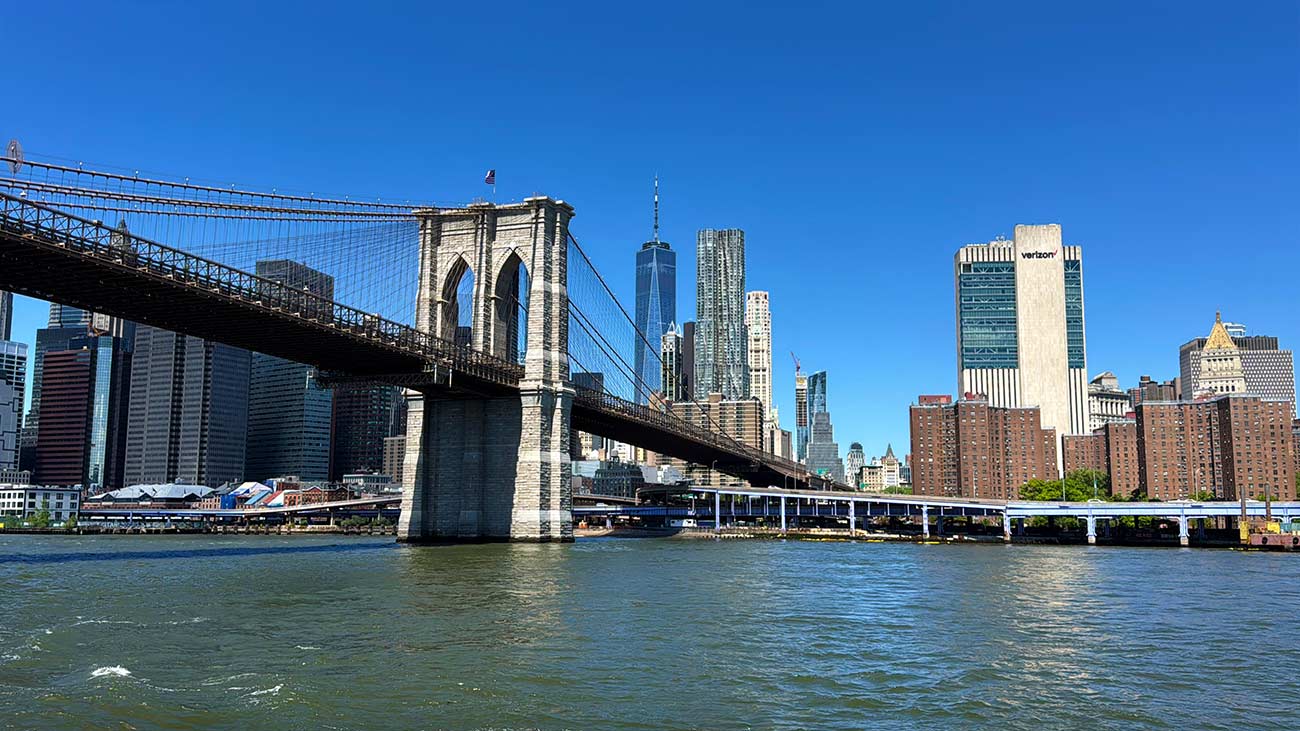
See the Brooklyn Bridge from Both Perspectives
Walking across the Brooklyn Bridge is one of New York City's most popular experiences, but seeing it from the water reveals an entirely different perspective. From the cruise, you'll appreciate the bridge's massive granite towers, intricate suspension cables, and the dramatic Manhattan skyline rising behind it—all in one unforgettable view.
Continue to South Street SeaportSouth Street Seaport
As the Brooklyn Bridge begins to fade into the distance, look toward Manhattan's waterfront and you'll spot the historic South Street Seaport. Many passengers admire the brick buildings from the boat without realizing they're looking at one of the best neighborhoods to explore before or after a sightseeing cruise.
If you only have time to visit one neighborhood near Pier 36, this should be high on your list.
One of the biggest reasons is the Tin Building by Jean-Georges, which reopened in 2022 after an extensive restoration. Today it's one of New York City's premier food halls, offering everything from fresh seafood and bakeries to coffee shops, gourmet markets, and full-service restaurants. Whether you're looking for breakfast before boarding or dinner afterward, it's an excellent place to start.
Just outside the Tin Building, the waterfront promenade offers spectacular views of the Brooklyn Bridge, the East River, and the Manhattan skyline. It's the kind of place where you can grab a coffee, find a bench, and simply watch New York Harbor come alive as ferries, tugboats, sailboats, and sightseeing cruises pass by throughout the day.
Keep an eye out for Pier 17, another landmark you'll notice from the boat. Today it's one of Lower Manhattan's most popular gathering places, featuring rooftop concerts, waterfront restaurants, seasonal events, and some of the best skyline views in the city.
History still surrounds the neighborhood. The restored cobblestone streets, historic warehouse buildings, and the tall-masted sailing ship Wavertree provide reminders of New York's maritime past, while the modern skyline rising directly behind them showcases just how dramatically the city has evolved.
If your schedule allows, we highly recommend returning here after your cruise. It's one of those neighborhoods that perfectly combines great food, shopping, waterfront scenery, and history without feeling as crowded as many of Manhattan's better-known attractions.
Lower Manhattan Skyline
As your cruise continues beyond the Brooklyn Bridge, the skyline suddenly opens up in front of you. This is one of the moments many passengers have been waiting for—the first panoramic view of Lower Manhattan rising directly from the water.
Here's one piece of advice we always give first-time passengers: Don't put your camera away just yet.
As the boat leaves the East River and enters New York Harbor, many people immediately begin looking for the Statue of Liberty. While Lady Liberty is undoubtedly the highlight of the cruise, this is actually one of the very best opportunities to photograph the Manhattan skyline while you're still close enough to capture incredible detail.
Within just a few minutes, the boat will move farther into the harbor and the skyline will begin to feel more distant.
If you're hoping to take those classic New York skyline photos, now is the time. You'll have unobstructed views stretching from the Brooklyn Bridge to Battery Park, with dozens of skyscrapers rising directly from the waterfront. Whether you're using a smartphone or a professional camera, this is one of the easiest places along the route to capture the skyline in all its detail. We've also created a complete guide to the Manhattan skyline that explains many of the buildings you'll see from New York Harbor.
Towering above everything else is One World Trade Center, making it easy to identify the center of Lower Manhattan. Around it you'll notice dozens of historic and modern skyscrapers packed into just a few square miles, creating one of the most recognizable skylines in the world.
Take a few extra moments to enjoy this view before your attention naturally shifts toward the Statue of Liberty. Many passengers are so excited to see Lady Liberty that they unintentionally miss one of the most spectacular skyline views of the entire cruise.
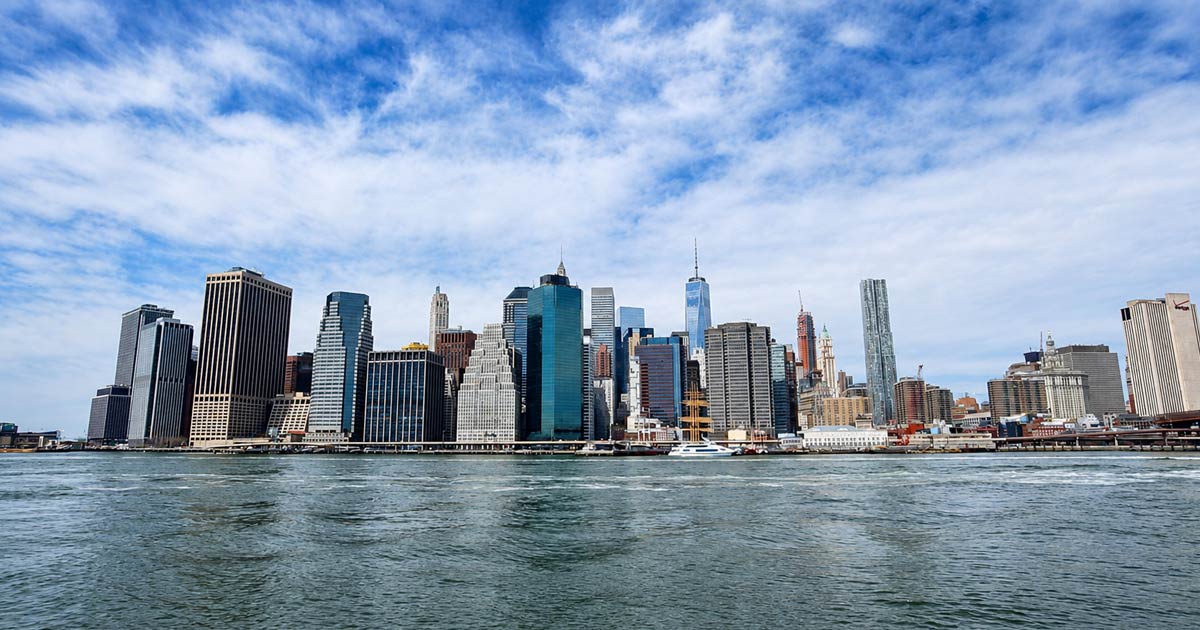
Capture the Skyline Before the Statue of Liberty
Many passengers immediately turn toward the Statue of Liberty, but this is actually one of the best places on the cruise to photograph Lower Manhattan while the boat is still close enough to capture incredible detail.
Continue to the Statue of LibertyGovernors Island
As your cruise leaves the East River and enters New York Harbor, Governors Island comes into view just off the southern tip of Manhattan. At first glance, it may appear to be a quiet island filled with open lawns and historic buildings, but today it has become one of New York City's best-kept secrets.
If you're spending more than a day or two in New York, this is one destination we highly recommend returning to after your cruise.
Unlike most of Manhattan, Governors Island has no private cars, making it one of the city's most peaceful places to explore. Visitors can rent bicycles, stroll along waterfront promenades, relax in hammocks overlooking the harbor, visit seasonal art installations, or simply enjoy a slower pace away from the crowds.
One of the biggest reasons to visit is the view. Some of the most spectacular photographs of Lower Manhattan can be taken from Governors Island, where the skyline, Brooklyn Bridge, Statue of Liberty, Ellis Island, and New York Harbor all come together in one panoramic scene.
As you pass by, look toward the center of the island and you'll notice The Hills, a series of landscaped viewpoints that rise well above the surrounding park. From the top, visitors enjoy sweeping 360-degree views that many photographers consider among the best in New York City.
Seeing Governors Island from the cruise offers a preview of everything waiting on shore. It's one of those places that many visitors overlook when planning their trip, but once they discover it, it often becomes one of their favorite memories of New York.
As the boat continues past Governors Island, another iconic landmark begins to come into view. Just ahead sits Ellis Island, a place that many visitors choose to return to after the cruise for an entirely different experience.
The Battery and Battery Park
As your cruise rounds the southern tip of Manhattan, you'll pass The Battery, where New York City meets New York Harbor. While many visitors recognize it as the departure point for ferries to the Statue of Liberty and Ellis Island, it's much more than a transportation hub. This waterfront has welcomed visitors arriving by sea for centuries and remains one of the most scenic places in Lower Manhattan.
One of the easiest landmarks to recognize is Castle Clinton, the circular sandstone fort sitting near the water's edge. Although originally built to help defend New York Harbor, today it serves as the starting point for millions of visitors heading to the Statue of Liberty and Ellis Island each year. From the deck of the boat, its distinctive circular design makes it easy to spot among the surrounding trees and waterfront paths.
If you're planning to spend more time exploring Lower Manhattan, Battery Park deserves more than a quick walk to the ferry terminal. The waterfront promenade offers beautiful harbor views, peaceful gardens, public art, and plenty of places to sit and watch New York Harbor come alive. It's one of the best places in the city to slow down after a busy day of sightseeing.
Battery Park also serves as the perfect starting point for exploring Lower Manhattan. Within just a few minutes' walk you'll find the Financial District, Wall Street, the Charging Bull, the 9/11 Memorial, One World Trade Center, Stone Street, and the South Street Seaport. Many visitors unknowingly pass through Battery Park on their way to the Statue of Liberty without realizing they're standing in one of the most beautiful waterfront parks in New York City. After returning to Pier 36, you can continue exploring with our guide to the best things to do on Manhattan's Lower East Side.
From the cruise, you'll appreciate something that's difficult to experience from land. Standing at the meeting point of the Hudson River, East River, and New York Harbor, Battery Park offers sweeping views in every direction. Behind it rises the dramatic skyline of Lower Manhattan, while ahead the harbor opens toward Governors Island, Ellis Island, and the Statue of Liberty.
As the shoreline begins to drift behind the boat, your attention naturally shifts toward another iconic landmark. Just ahead sits Ellis Island, where today's visitors can experience one of New York Harbor's most meaningful museums.
Ellis Island
As your cruise continues through New York Harbor, Ellis Island comes into view just beyond the Statue of Liberty. While your sightseeing cruise provides outstanding views of the island, many passengers quickly realize it's a place worth returning to on another day.
Unlike a sightseeing cruise, visiting Ellis Island allows you to spend hours exploring one of America's most fascinating museums at your own pace.
Inside the Ellis Island National Museum of Immigration, you'll walk through the historic Great Hall, explore interactive exhibits, browse passenger arrival records, and discover the personal stories of millions of immigrants who began their lives in America here. Whether you're interested in history, genealogy, or simply understanding one of New York City's most important landmarks, Ellis Island is an experience unlike any other.
One of the most popular activities is searching the passenger archives. Many visitors discover the names of parents, grandparents, or relatives who first arrived in America through these very halls. Even if you don't have a family connection, the museum does an incredible job of telling the human stories behind one of the nation's most important chapters.
From the deck of your sightseeing cruise, you'll enjoy some of the best panoramic views of the island's historic Main Immigration Building and its distinctive red brick architecture. Consider this your preview.
Our recommendation is simple: enjoy the view today, then come back another day if you have the time. If you're wondering how this experience compares with visiting Liberty Island itself, read our complete Statue of Liberty cruise guide. The Statue of Liberty ferry experience and the NYC Skyline Cruise complement one another perfectly. One lets you experience the harbor from the water, while the other allows you to step ashore and explore these incredible landmarks in greater detail.
As the boat continues toward Liberty Island, the landmark that everyone has been waiting to see slowly grows larger with every passing minute.
Statue of Liberty
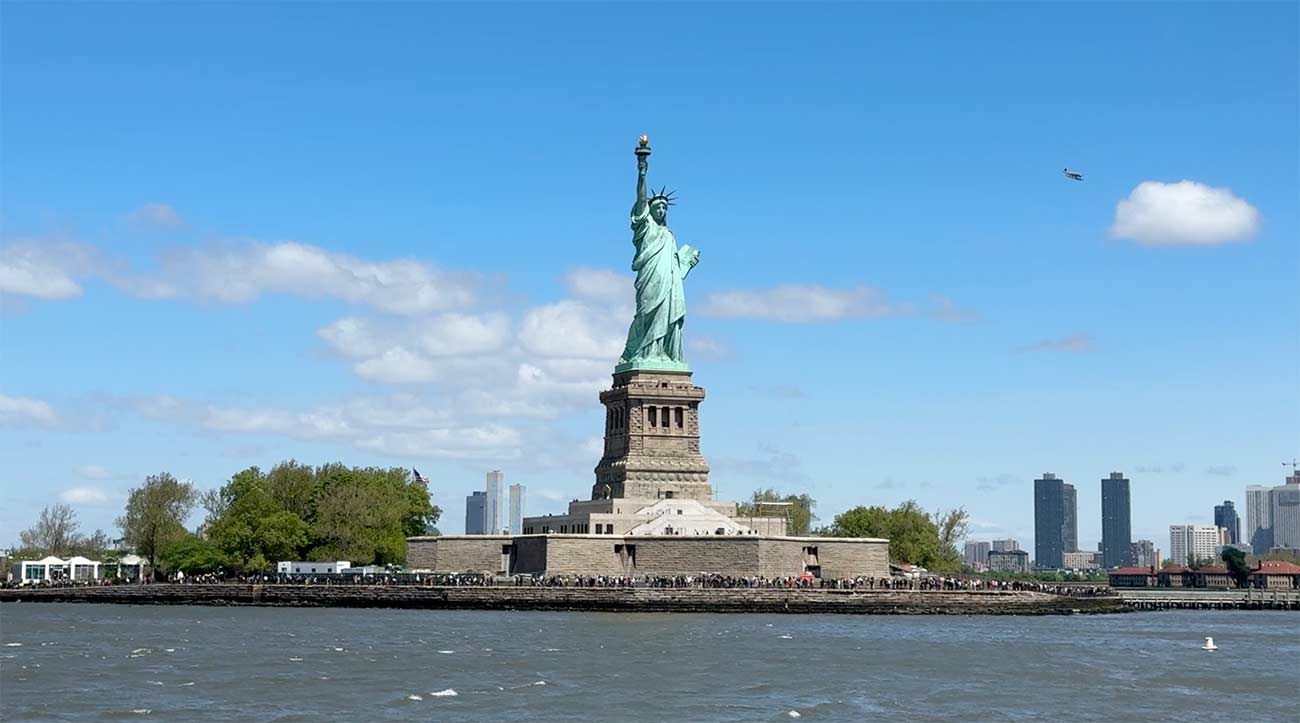
Without question, this is the moment everyone has been waiting for. If you're specifically interested in seeing Lady Liberty from the water, our Statue of Liberty cruise guide explains what to expect.
No matter how many photographs you've seen, how many movies you've watched, or how many times you've spotted the Statue of Liberty on television, nothing truly prepares you for seeing Lady Liberty standing in New York Harbor with your own eyes.
For many passengers, this becomes the defining memory of the entire cruise.
As the boat slowly approaches Liberty Island, conversations begin to quiet, cameras come out, and nearly everyone turns toward the bow. It's one of those rare travel moments where thousands of photographs will be taken—but the memory of seeing it for the first time often becomes even more meaningful than the pictures themselves.
If this is your first visit to New York City, here's one piece of advice:
Take a few seconds before reaching for your camera.
Simply look at the Statue of Liberty.
Take in the scale, the harbor, the skyline behind her, and the feeling of finally seeing one of the world's most recognizable landmarks in person. The photographs will always be there, but that first moment only happens once.
Then start taking pictures.
Your captain will usually slow the vessel as it approaches Liberty Island, giving everyone plenty of time to capture the statue from multiple angles. One of the advantages of viewing Lady Liberty from a sightseeing cruise is that the perspective is constantly changing. As the boat moves around the harbor, Lower Manhattan rises behind her, Governors Island appears to one side, and Ellis Island comes into view nearby. Every angle tells a slightly different story.
Whether you're traveling with family, friends, or celebrating a special occasion, this is the perfect time for a group photograph. Ask another passenger to take your picture or head to the upper deck where the Statue of Liberty creates one of the most unforgettable backdrops anywhere in New York City.
Standing 305 feet tall from the ground to the tip of her torch, the Statue of Liberty has welcomed visitors arriving in New York Harbor since 1886. Today she continues to symbolize hope, opportunity, and freedom for millions of people around the world. While every visitor arrives with a different story, the feeling of finally seeing her in person is remarkably universal.
As the boat slowly begins to leave Liberty Island behind, take one last look over your shoulder. Many passengers spend so much time photographing the statue that they forget to simply enjoy the moment. Long after your trip to New York is over, this final view of Lady Liberty standing proudly against the skyline is often the image that stays with you the longest.
One World Trade Center
As the Statue of Liberty slowly fades into the distance, another landmark immediately captures your attention. Rising high above every other building in Lower Manhattan is One World Trade Center, the tallest building in the Western Hemisphere and the unmistakable centerpiece of New York City's skyline.
Standing 1,776 feet tall, the tower is easy to identify from almost anywhere in New York Harbor. Its sleek glass exterior, tapered design, and towering spire make it the skyline's most recognizable building and a natural point of reference throughout the return portion of the cruise.
One detail many visitors don't realize is that the building's height was chosen intentionally. Standing 1,776 feet tall, it commemorates the year 1776, when the United States declared its independence. Today, One World Trade Center has become one of the defining symbols of modern New York City.
As your boat continues north, notice how dramatically the tower rises above the surrounding skyline. While Lower Manhattan is filled with impressive skyscrapers, none command attention quite like One World Trade Center. On clear days, its reflective glass changes throughout the afternoon, mirroring the harbor, clouds, and sunlight while creating a constantly changing appearance.
Look just below the tower and you'll begin noticing other landmarks coming into view, including Brookfield Place, Battery Park City, and the rest of Manhattan's western shoreline. The skyline begins to evolve once again, marking the start of the final chapter of your journey back to Pier 36.
Battery Park City, Brookfield Place & Hudson River Park
As One World Trade Center remains towering above the skyline, you'll begin noticing a completely different side of Manhattan at its base. This neighborhood is Battery Park City, and it surprises many first-time visitors with how peaceful it feels compared to the busy Financial District just behind it.
Look for the wide waterfront promenade stretching along the Hudson River. Instead of office towers pressed against the shoreline, you'll see tree-lined walkways, beautifully maintained parks, and modern residential buildings. It's common to spot runners, cyclists, families, and people simply relaxing while enjoying the harbor views.
Battery Park City is one of those places that many visitors never discover, but it's well worth returning to after your cruise. If you're looking for a quieter place to enjoy the skyline, take a walk along the waterfront here during sunset. It's one of Lower Manhattan's hidden gems.
Just beyond Battery Park City, you'll notice Brookfield Place, one of Lower Manhattan's premier shopping and dining destinations. Its waterfront marina is often filled with luxury yachts, sailboats, ferries, and sightseeing vessels, creating another memorable harbor scene.
If you're looking for a relaxing place to visit after your cruise, Brookfield Place is an excellent choice. Grab lunch, enjoy a coffee overlooking the marina, or simply explore the waterfront while taking in another incredible perspective of the Manhattan skyline.
Continuing north, the shoreline becomes Hudson River Park, where runners, cyclists, kayakers, paddleboarders, ferries, and sailboats all share the river. It's a reminder that New York's waterfront isn't just a tourist attraction—it's part of everyday life for the people who live here.
Chelsea Piers & Little Island
One of the largest landmarks along Manhattan's west side is Chelsea Piers. While you'll recognize it from the water by its long waterfront structures, it's a destination worth returning to after your cruise.
Today, Chelsea Piers is one of New York City's largest sports and entertainment complexes. Visitors can play golf over the Hudson River, go bowling, try indoor rock climbing, skate, or simply enjoy the waterfront promenade surrounding the piers.
As your boat passes by, you'll usually see golfers hitting balls into the river, runners making their way along the waterfront, and boats constantly arriving and departing.
Just beyond Chelsea Piers sits one of New York City's newest landmarks—Little Island. Rising above the Hudson River on hundreds of sculptural concrete columns, it's become one of the city's most photographed parks.
Winding pathways, gardens, scenic overlooks, live performances, and quiet places to relax make Little Island one of New York's most enjoyable public spaces. Best of all, admission is generally free, making it an easy addition to almost any itinerary.
As your cruise passes by, consider this your preview. If you find yourself wondering what it's like to explore the park, that's probably a sign you should come back.
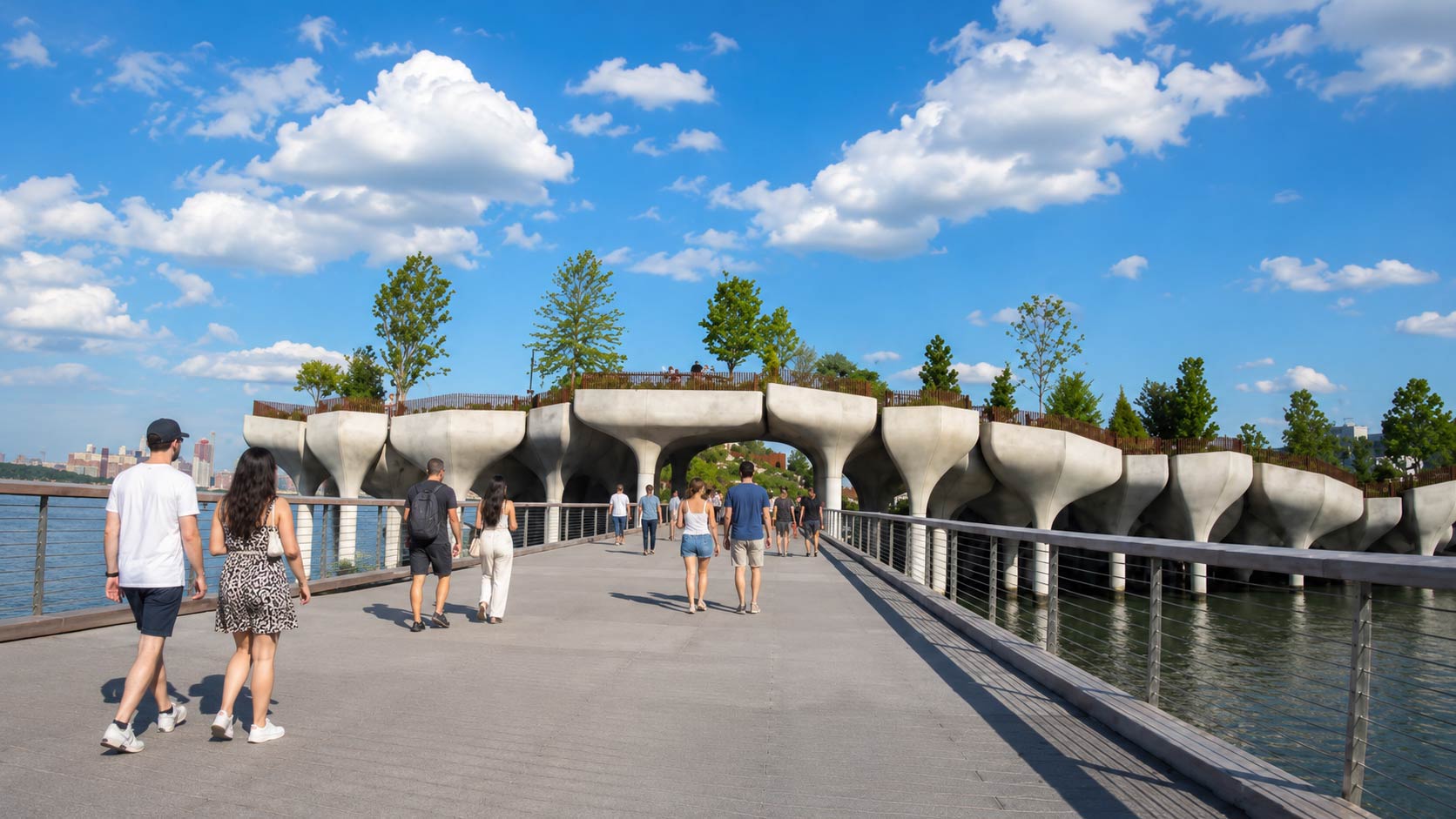
Explore Little Island
Little Island is especially beautiful in the evening, when the gardens, waterfront paths, and Manhattan skyline are illuminated by the changing light. It can be a great stop before an evening on the water. For more ideas, explore our guide to romantic sunset cruises in New York City.
The Return Journey
As the captain turns the boat back toward the East River and Pier 36, the pace of the cruise begins to slow. The major landmarks of New York Harbor are now behind you, giving you one last opportunity to enjoy the skyline from a different perspective.
This is also a great time to put the camera down for a few minutes and simply enjoy the ride home.
As the boat re-enters the East River, keep an eye on the Brooklyn shoreline. You'll pass DUMBO and Brooklyn Bridge Park, where historic warehouses now sit alongside waterfront parks, restaurants, and modern residences. These neighborhoods are worth exploring on foot as well. Our Brooklyn Bridge Cruise guide includes additional places to visit around Brooklyn Bridge Park and DUMBO.
Pier 17 & the Lower East Side
As Manhattan comes back into view, look for Pier 17 along the East River waterfront. Its rooftop concert venue, waterfront restaurants, and outdoor terraces have made it one of Lower Manhattan's most popular gathering places.
Soon you'll find yourself alongside the Lower East Side once again. From the river, you'll notice a fascinating mix of historic brick buildings and modern residential towers. On land, however, this neighborhood offers local restaurants, nightlife, cafés, galleries, and small shops that many visitors never discover.
If you have an extra evening in New York City, it's well worth exploring.
Williamsburg Bridge
One landmark that's easy to miss before reaching the bridge is Corlears Hook, the bend in Manhattan's shoreline just north of Pier 36. Nearby, East River Park stretches along the waterfront, where you'll often see runners, cyclists, families, and locals enjoying the river.
The final major landmark before returning to Pier 36 is the Williamsburg Bridge. Unlike the stone towers of the Brooklyn Bridge, it's easy to recognize by its enormous steel framework stretching across the East River.
As your boat approaches, take a moment to look overhead. If you're lucky, you'll see a New York City subway train crossing the bridge just as your cruise passes beneath it. It's one of those everyday New York moments that visitors rarely experience, yet it perfectly captures the rhythm of the city.
By now, the skyline has come full circle. The same waterways that introduced you to New York at the beginning of the cruise now welcome you back to Pier 36, bringing an unforgettable journey to a close.
Conclusion: More Than Just a Boat Ride
By the time your cruise returns to Pier 36, you'll realize that a New York City skyline cruise is about much more than simply seeing the Statue of Liberty.
It's about understanding the city from the water.
Over the last 90 minutes, you've watched New York gradually unfold before you. You've passed beneath world-famous bridges, admired one of the most recognizable skylines on Earth, cruised through New York Harbor, stood face-to-face with the Statue of Liberty, and discovered neighborhoods and attractions that many visitors never even knew existed.
Hopefully, this guide helped you experience more than just the landmarks.
Maybe you noticed the skyline before everyone else turned toward the Statue of Liberty. Maybe you found yourself adding Governors Island, South Street Seaport, Little Island, or the Brooklyn Bridge to tomorrow's itinerary. Or maybe you simply took a few extra moments to put the camera down and appreciate where you were.
That's really what this cruise is all about.
The skyline will continue to change. The light will be different every hour. Every sunset creates a new backdrop, every season offers a different perspective, and no two cruises ever feel exactly the same. That's one of the reasons so many New Yorkers enjoy experiencing the harbor just as much as first-time visitors.
As your boat eases back into Pier 36, remember one final thing.
You've only seen one side of New York City.
Now it's time to step ashore and experience the places you've just discovered from the water.
Walk across the Brooklyn Bridge. Spend an afternoon on Governors Island. Enjoy a meal at the Tin Building. Explore Ellis Island. Watch the sunset from Little Island. Sit along the waterfront at Pier 17. If you're still planning your time on the water, our guide to the best NYC sightseeing cruise can help you compare the experience and decide what belongs on your itinerary.
Your skyline cruise wasn't just another attraction.
It was the perfect introduction to New York City.
And long after your trip is over, there's a good chance it won't be the buildings or even the photographs that stay with you the most. It'll be the feeling of watching the skyline slowly rise from the water, seeing the Statue of Liberty for the first time, and realizing why millions of people have fallen in love with this city from the very same harbor.
More NYC Cruise and Waterfront Guides
Use these guides to compare sightseeing options, identify skyline landmarks, and plan what to explore before or after your cruise.
Ready to Experience the Skyline Yourself?
Now that you've explored the route, see New York Harbor, the Manhattan skyline, and the Statue of Liberty from the water.
Reserve Your Cruise